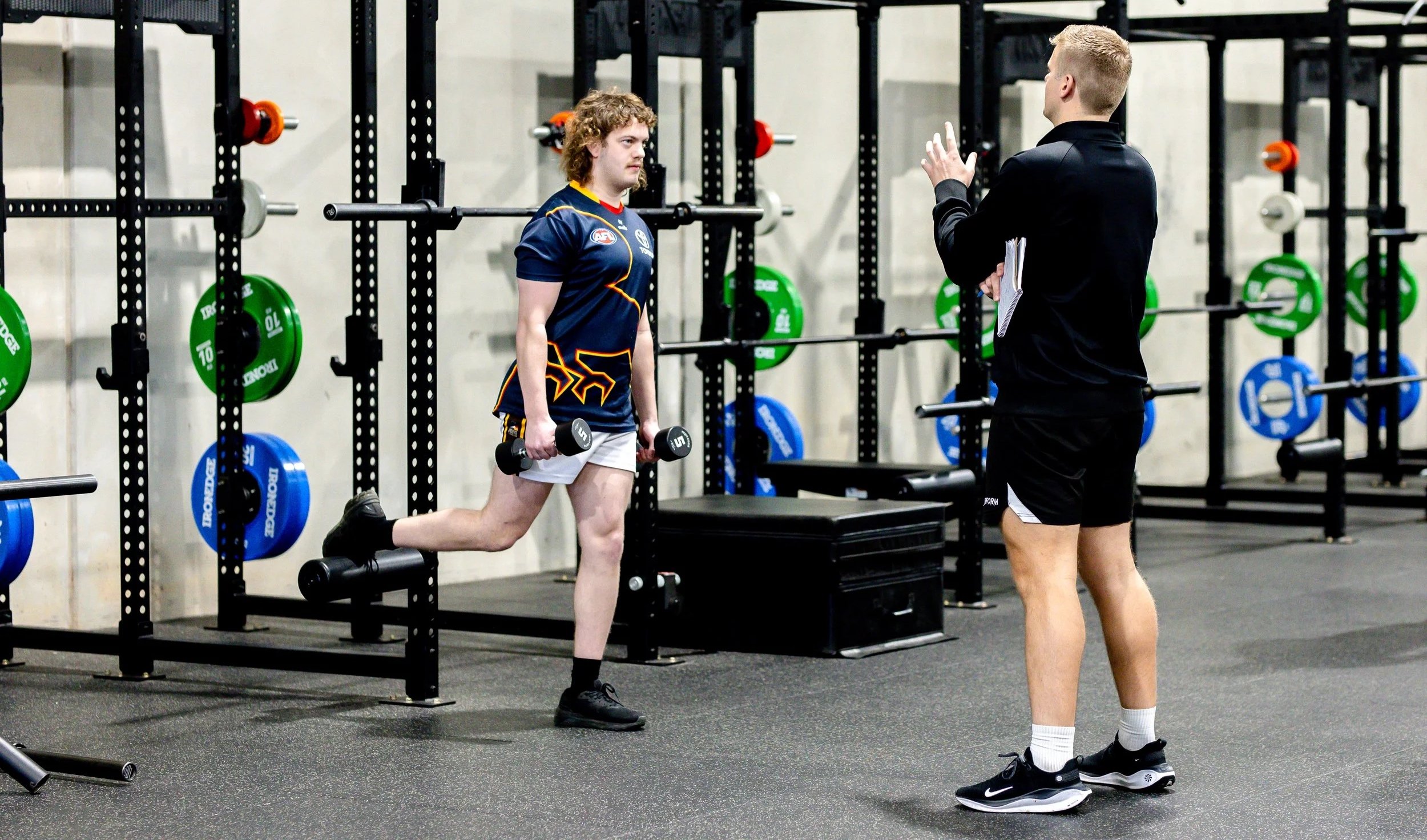
Don’t Make This Mistake when Recovering from ACL Surgery
By Rohan Nelson, June 2026
One of the biggest mistakes people make after an ACL surgery is thinking that rehab is purely about ticking off time. Six weeks, three months, six months, back to running, back to sport. It sounds simple, but the problem is your knee does not heal based on a calendar.
After an ACL reconstruction, there are certainly biological timelines that the graft follows, but your ability to actually use your knee does not automatically match that. Strength, control and confidence all need to be rebuilt, and that happens at different rates for different people. This is where a lot of athletes run into trouble, especially when they start progressing based on time rather than whether they are actually ready. If you want help with your rehab click here, or if you’re wanting to know more about ACL rehab keep reading. .
A common example of this is returning to run too early. A lot of people are told they can start running around the 12 week mark, but that does not mean their knee is ready for it. Running places repeated load through the knee, and if the athlete does not have enough quadriceps strength or control, they are often just compensating. This can show up as offloading onto the other leg, reduced knee bend, increased hip or trunk lean, or relying more on the ankle to absorb force rather than the knee. It might feel okay in the moment, but over time these patterns can become ingrained and lead to ongoing issues like persistent quad weakness, asymmetrical loading, or difficulty generating force through the affected leg. This is important because early running is where a lot of your movement patterns start to come back. If you build it on poor mechanics, it can carry through into higher speed work and eventually affect sprinting. Learning to run well early on, with good control and force through the knee, sets a much better foundation for progressing into faster running and reduces the risk of developing poor sprint mechanics later in rehab.
Research consistently shows that deficits in quadriceps strength and poor performance in functional tasks like hopping are linked to worse outcomes and a higher risk of reinjury. These are not just exercises used in rehab, they are indicators of whether the knee can actually handle load. If an you cannot produce and control force properly in these tasks, it suggests your knee is not ready for higher level activities, and progressing too early only increases the risk.
This is why at iPerform we believe using a criteria-based approach to ACL rehab is so important. Instead of asking how many weeks post surgery you are, the questions we ask are around what can your knee actually do. Can you produce enough force through the leg? Can you control that force under fatigue? Can you handle repeated loading without symptoms such as pain or swelling increasing? These are the things that should guide your rehab progressions.
Another issue with strict timelines is that they create a false expectation for athletes. They may feel like they should be at a certain point by a certain time, and if they are not, they either rush or feel like they are behind. In reality, variability is completely normal. Some athletes progress quicker, others take longer, and both can be completely appropriate depending on the situation.
If you are going through ACL rehab in Adelaide, the focus should not be on how quickly you can move through phases, but how well you can build capacity at each stage. Good rehab should gradually increase load, challenge the knee in different ways, and prepare you for the demands of your sport.
At iPerform, this is exactly how we approach ACL rehab. We use objective measures to guide progression, not just timeframes. Strength testing, movement assessment, and on-field/court progression all play a role in deciding when you are ready to move forward. This helps reduce the risk of setbacks and gives athletes confidence that they are actually prepared.