Helpful Modalities in Early-Stage Rehab
By Joel Hough, July 2026
One of the biggest challenges in early-stage rehab is that athletes often can’t tolerate enough loading to maintain strength and muscle mass. Pain, swelling, surgical restrictions, and tissue healing timelines can all limit how much force the body can safely handle.
At the same time, injuries commonly cause neuromuscular inhibition, where the body tries to protect the injured joint, and makes it hard for people to fully activate a muscle. For example, struggling with quad activation after ACL surgery. This can happen anywhere in the body depending on where the injury occurs.
The issue is that muscle size and capacity can decrease rapidly when they aren’t being loaded like normal. This can cause major problems in early-stage rehab when heavy strength training isn’t appropriate yet. This is where modalities like Blood Flow Restriction (BFR) and Electrical Stimulation (E-Stim) can help bridge the gap between muscle activation and strength training.
Blood Flow Restriction (BFR)
BFR uses a cuff to partially restrict blood flow to a limb during low-load exercise. This creates a stressful environment in the muscle and allows athletes to create a solid strength and muscle hypertrophy stimulus without needing heavy weights.
In early rehab, this is useful because it:
Helps maintain muscle mass/reduce muscle atrophy
Allows training with lower joint stress
Creates a training effect, allowing for strength improvements when heavy loading isn’t tolerated
Can help with pain management
When used appropriately, BFR allows athletes to continue making meaningful strength gains during periods when conventional heavy resistance training simply isn't an option.
Electrical Stimulation (E-Stim / NMES)
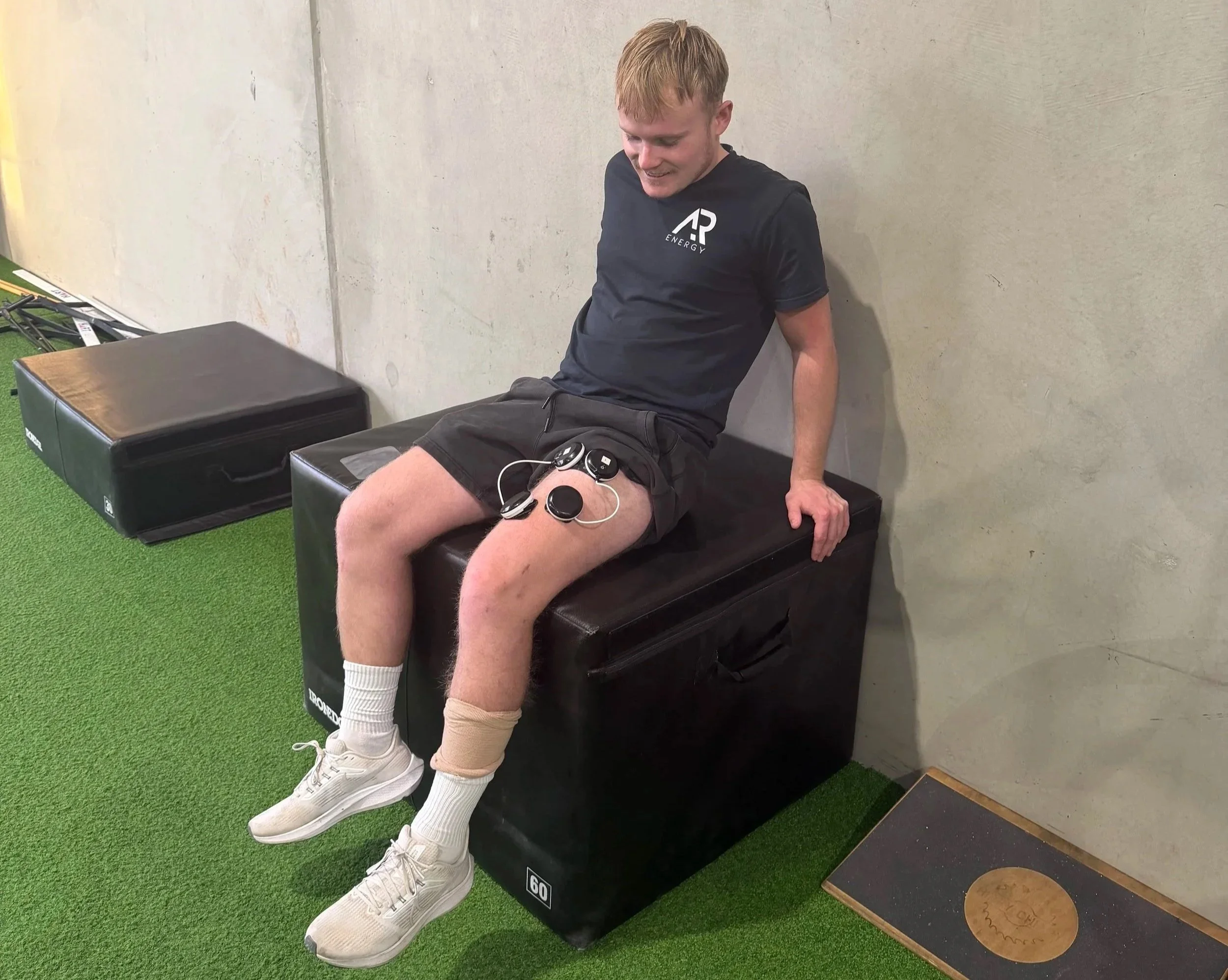
E-Stim uses a targeted electrical current to create muscle contractions. It’s commonly used when athletes struggle to properly activate a muscle after injury or surgery due to neuromuscular inhibition.
Its main role early in rehab is improving muscle recruitment and reducing inhibition. This is especially common with the quadriceps after knee surgery.
Benefits can include:
Improved muscle activation
Reduced strength loss
Increased training stimulus when voluntary contraction is poor
By restoring muscle activation earlier in the rehabilitation process, E-Stim helps lay the foundation for more effective strength training and a smoother progression back to full function.
Optimise Your Recovery with iPerform
At iPerform, BFR and E-Stim are just a few of the sports science tools we utilise to ensure every athlete gets the best possible outcome through their rehabilitation journey.
Are you navigating an early-stage injury or preparing for an upcoming surgery?
Don't let muscle wasting set your recovery timeline back. Get in contact with the iPerform team today to see if these advanced modalities are right for your rehab.