Long Term Athlete Development and ACL Injury Prevention
By Rohan Nelson, July 2026
Young athletes are doing more than ever. Especially in high-demand sports like footy, soccer, and netball they are constantly sprinting, cutting, and changing direction at high speeds.
But a lot of the time, they are doing this without the physical foundation to support it. When the demand of the sport outweighs what the body can tolerate, that creates a greater risk of injury. Strength plays a huge role here, but not in the way most people think.
Redefining What Strength Actually Means
Strength is not about hitting a specific number in the gym or passing a single test. Strength is something that is built over time through consistent training. It reflects what you do repeatedly, not something you suddenly try to gain once you are injured and starting rehab.
In that sense, strength is really the capacity to resist strain and stress, built through exposure over time. What we measure in testing is only a snapshot of what an individual does repeatedly through long term athlete development.
We know that deficits in strength, particularly quadriceps strength, and poor performance in tasks like hopping and landing are directly linked to higher ACL injury risk. These metrics should be used as predictors; they are not just things we should be looking at during ACL rehab. If an athlete cannot control force well through the knee during high-speed or change-of-direction movements, that load is often transferred directly to passive structures like the ACL.
There is strong evidence that targeted strength and neuromuscular training can reduce ACL injury risk, particularly in younger athletes. Programs that focus on landing mechanics, strength, and control have been shown to significantly reduce injury rates when done consistently. The key is that this needs to be part of long-term athlete development, not something that is only done in preseason or as a once off focus.
The Compounding Risk for Female Athletes
This becomes even more relevant in female athletes, where ACL injury rates are disproportionately higher. Often from a young age, females are relatively under-loaded in terms of strength and resistance training, yet later expected to handle high physical demands as sport becomes more competitive. They are then in the unfortunate position of having to attempt to build capacity over a much shorter period of time, with far less ability to tap into long-term athlete development; the kind of true, resilient capacity that can only be built over years of consistent exposure.
Over time, even small differences in weekly training exposure can add up significantly, contributing to a higher injury risk. If not addressed early, factors like lifestyle and training gaps can manifest as:
Reduced hip control
Increased knee valgus (knees caving inward)
Limited movement variability
The Danger of the "Average" Benchmark
It is vital to define what it actually means to be ready for performance. Many athletes are compared to average benchmarks, but being average does not mean you are prepared for sport.
There is a massive difference between meeting a minimum standard and actually being able to handle the chaotic demands of competition. If we aim for minimum standards, we often end up with athletes who can participate, but are not truly prepared to perform or stay injury-free. True long-term athlete development does away with these arbitrary benchmarks. Instead, it meets the individual athlete exactly at their current capacity and aims to progressively develop them over time. The goal is to prepare them for the specific, unique demands of their sport and their body, rather than chasing a generic, one-size-fits-all score.
Bridging the Training Gap in Adelaide
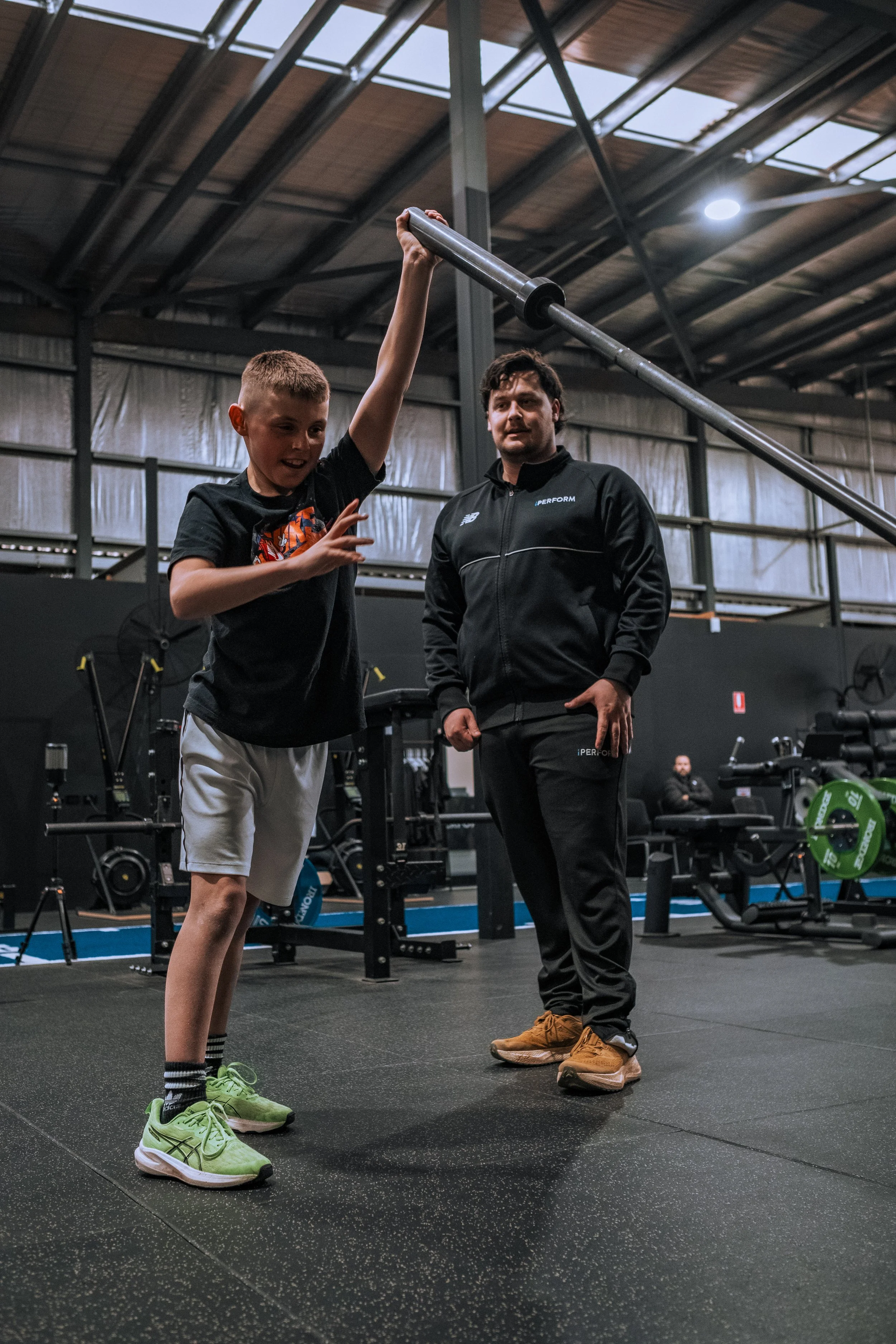
At iPerform, our Athletic Performance Program is focused on building strength, movement quality, and load tolerance from the ground up, with a specific focus on long-term athlete development for youth athletes. Our approach includes:
Progressive exposure to running and rapid change of direction
Gradually preparing athletes for the true demands of their sport
This methodology does not just improve performance on game day; it actively reduces the risk of serious injuries like ACL ruptures.
There is likely a big gap in Adelaide where athletes are training incredibly hard, but not always in a way that prepares them properly. More games, more running, and more skill work does not automatically equal better preparation. While the risk of injury will always remain in sport, a strong physical foundation is what structurally reduces this risk.
The Bottom Line
Our approach to ACL rehab and prevention in Adelaide is built entirely around long-term athlete development. Whether you are coming back from an ACL injury or doing everything you can to avoid one, the focus remains exactly the same: Build strength over time, expose the body to the right loads, and prepare for the sport properly.
At the end of the day, ACL injury prevention is not about one specific exercise or a single phase of training. It is about building capacity over years. The athletes who stay on the field long-term are usually the ones who were built properly from the start.